
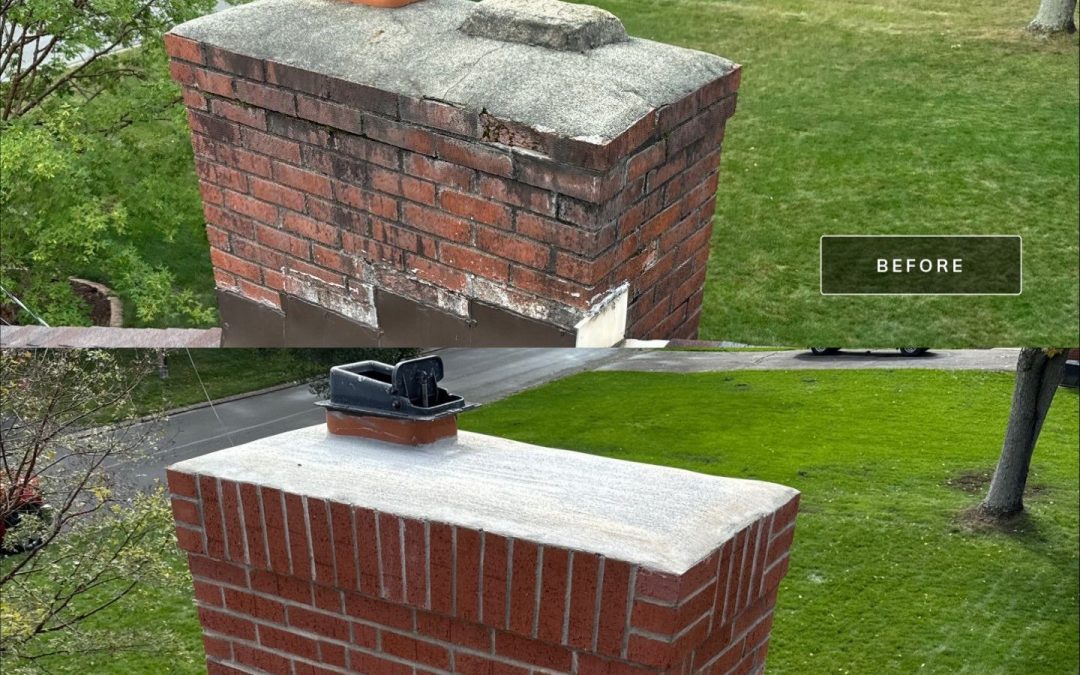
White, chalky stains on brick walls, chimneys, or masonry steps can make homeowners wonder whether something is wrong. Often, the cause is efflorescence, a deposit left behind when moisture carries dissolved salts to the surface. While these stains are not necessarily a sign of structural damage, they can offer clues about how water is moving through your masonry.
What Is Efflorescence?
Brick, mortar, and other masonry materials can contain soluble salts. When water enters these materials, it dissolves some of those salts and carries them through the masonry’s pores. As the water reaches the surface and evaporates, the salts remain as a white, powdery or crystalline residue.
Efflorescence sometimes appears on newer masonry as construction moisture dries out. It can also develop on older homes after wet weather. Pittsburgh’s rain, snowmelt, and seasonal temperature changes can contribute to the conditions that allow these deposits to form.
How Moisture and Drainage Contribute
The staining itself is usually less concerning than the moisture source behind it. Water may enter through deteriorated mortar joints, cracked chimney crowns, damaged flashing, or other openings. Around foundations and steps, damp soil and poor surface drainage can keep masonry wet.
Overflowing gutters, downspouts that discharge near the house, and ground that slopes toward exterior walls can also contribute. When these conditions repeatedly soak the same area, white deposits may return even after cleaning.
Where the staining appears can help guide an inspection. Deposits beneath a chimney crown may suggest water entry from above, while staining near the bottom of a wall may point toward splash back, soil moisture, or drainage problems. Appearance alone, however, cannot confirm the source.
When Staining May Signal a Larger Problem
Occasional efflorescence without other symptoms may be mostly cosmetic. Recurring or widespread staining deserves closer attention, especially when it appears alongside:
- Crumbling mortar or widening cracks
- Brick faces that flake, chip, or break away
- Damp interior walls or musty odors
- Loose masonry, bulging walls, or chimney deterioration
Repeated moisture exposure can contribute to freeze-thaw damage when absorbed water freezes and expands. White staining is not proof of that damage, but accompanying deterioration should not be ignored.
Address the Moisture Before the Stain
Cleaning may improve appearance, but it will not correct an ongoing water problem. Avoid aggressive pressure washing or harsh chemicals that could damage brick and mortar. Cleaning methods should suit the masonry’s age and condition, and coatings should not be applied without understanding the moisture source.
If white stains keep returning, contact Prescott Roofing & Masonry to discuss a masonry assessment. Identifying drainage, flashing, or mortar problems first can help protect the masonry rather than just hide the symptoms.