
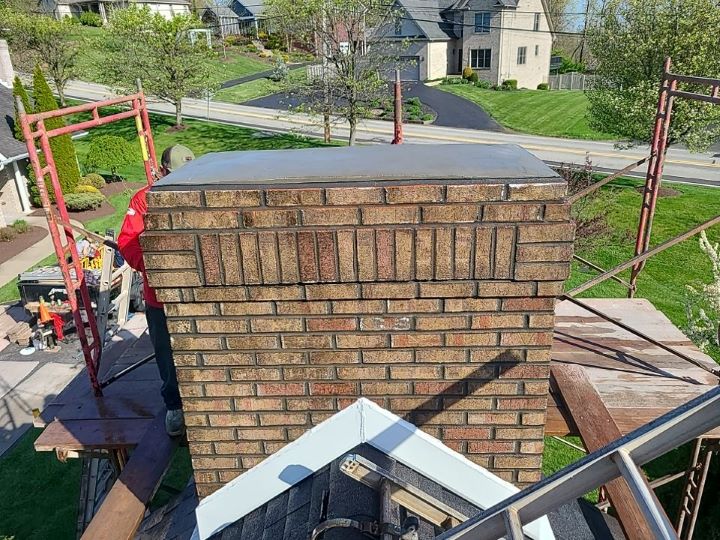
Chimney problems rarely begin with a dramatic collapse or a major stream of water pouring into the house. More often, they start with something small: a thin crack in the crown, a loose piece of flashing, a deteriorating mortar joint, or a faint water stain near an upstairs wall.
Those early warning signs can be easy to overlook. Unfortunately, Pittsburgh weather has a way of turning minor chimney damage into a much larger repair.
Rain, snow, ice, wind, and repeated freeze-thaw cycles all put pressure on chimneys and the roofing materials around them. Once moisture finds a weak point, it can move into brick, mortar, flashing, roof decking, and interior walls. What begins as a small exterior issue may eventually affect several connected parts of the home.
At Prescott Roofing, we have worked on Pittsburgh-area roofs, chimneys, and masonry for generations. We know that the most expensive chimney problems are often the ones that were allowed to develop quietly over time.
Here are four common issues homeowners should watch for.
1. Chimney Crown Damage
The chimney crown is the protective surface at the top of the chimney. Its job is to help direct rain and melting snow away from the masonry below.
A properly built crown should slope outward, so water does not sit on top of the chimney. It should also extend beyond the brickwork enough to help keep runoff away from the sides.
Over time, chimney crowns may develop:
- Small cracks
- Worn or crumbling surfaces
- Gaps around flue tiles
- Areas where water collects
- Broken or missing sections
Even a small crown crack can allow moisture to enter. During a Pittsburgh winter, that water may freeze and expand inside the opening. When temperatures rise, it thaws and moves farther into the material. Repeated cycles gradually widen the crack and weaken the surrounding masonry.
If crown damage is caught early, repairs may be relatively manageable. When it is ignored, water can travel deeper into the chimney and contribute to brick, mortar, and interior moisture damage.
2. Flashing Failure Around the Chimney
Flashing protects the transition where the chimney meets the roof. This is one of the most vulnerable areas of any roofing system because water must be directed away from two different surfaces and several adjoining seams.
Chimney flashing may include step flashing along the sides, flashing at the lower edge, and counterflashing integrated with the masonry. These pieces must work together to create a dependable water barrier.
Common flashing problems include:
- Loose or lifted metal
- Rust or corrosion
- Cracked sealant
- Gaps between flashing and masonry
- Improper overlaps
- Old patchwork repairs
- Flashing that was never installed correctly
When flashing fails, water can enter around the chimney base and move underneath the roofing materials. It may then travel along framing or roof decking before appearing inside the home.
That is why a ceiling stain near a chimney does not always appear directly below the actual opening.
Applying more caulk may temporarily slow the leak, but it may not correct the underlying flashing problem. A lasting repair requires identifying how water is entering and restoring the transition properly.
3. Brick and Mortar Deterioration
Brick chimneys look solid, but they are constantly exposed to weather from every direction. Unlike the walls below the roofline, chimneys have very little protection from rain, snow, wind, and temperature changes.
Brick and mortar are also porous. They can absorb moisture, especially as they age.
Warning signs of deterioration include:
- Cracked or missing mortar
- Loose bricks
- Flaking or crumbling brick faces
- White staining on the masonry
- Dark moisture marks
- Gaps between bricks
- Sections that appear to lean or shift
Flaking brick faces are often associated with a process called spalling. This can happen when moisture enters the brick, freezes, expands, and causes the surface to break apart.
Once the brick face is damaged, it can absorb even more water. That creates a cycle in which deterioration continues and may accelerate with every winter.
Mortar problems are equally important. Mortar joints help hold the chimney together and keep water from entering between bricks. When those joints begin to fail, the chimney becomes more vulnerable to moisture and structural movement.
Repointing or masonry restoration may be needed before the damage spreads.
4. Moisture Entry and Hidden Interior Damage
The most expensive chimney problems often involve water that has been entering the home for longer than anyone realized.
Moisture may travel through:
- Cracked crowns
- Deteriorated masonry
- Failed flashing
- Gaps near the roofline
- Damaged caps or covers
- Open mortar joints
Once inside, water can affect roof decking, framing, insulation, drywall, paint, and surrounding woodwork.
Homeowners may notice:
- Ceiling or wall stains near the chimney
- Peeling or bubbling paint
- Damp attic insulation
- Musty odors
- Discolored masonry indoors
- Water appearing after heavy rain or snowmelt
- Repeated leaks that return after earlier repairs
Because water can travel before becoming visible, the location of an interior stain does not always reveal the true source. A proper evaluation should include the chimney crown, brickwork, mortar joints, flashing, and nearby roofing materials.
Why Pittsburgh Chimneys Are Especially Vulnerable
Western Pennsylvania weather puts chimneys through constant movement.
A mild winter afternoon may be followed by freezing temperatures overnight. Snow may melt during the day and refreeze inside small masonry cracks after sunset. Spring and summer bring heavy rain, humidity, and wind-driven moisture.
Older Pittsburgh homes may also have chimneys that have been exposed to these conditions for many decades. Previous repairs, aging materials, and changes to the roof can all affect how well the chimney system manages water.
This does not mean every older chimney needs major reconstruction. It means regular attention becomes increasingly important as materials age.
When to Schedule a Chimney Evaluation
Homeowners should consider a professional evaluation when they notice:
- Visible crown cracks
- Loose, crumbling, or missing mortar
- Spalling brick
- Rusted or separated flashing
- Water stains near the chimney
- Repeated leak repairs
- Dampness after rain or melting snow
- Pieces of masonry around the base of the home
It is also smart to have the chimney and flashing checked during a roof inspection or before replacing the roof. Installing new roofing materials without addressing an existing chimney problem can leave a major leak source unresolved.
The Bottom Line
Chimney problems often start small, but Pittsburgh weather rarely allows them to stay small.
A cracked crown can let water into the masonry. Deteriorating brick and mortar can create new openings. Failed flashing can allow moisture beneath the roofing system. Once water reaches the interior, the repair may involve much more than the chimney alone.
At Prescott Roofing, we believe the best way to control repair costs is to identify these problems before moisture has time to spread. That means looking at the chimney, masonry, flashing, and surrounding roof as one connected exterior system.
If your chimney is showing signs of wear, an inspection now may help prevent a much more expensive repair later.