
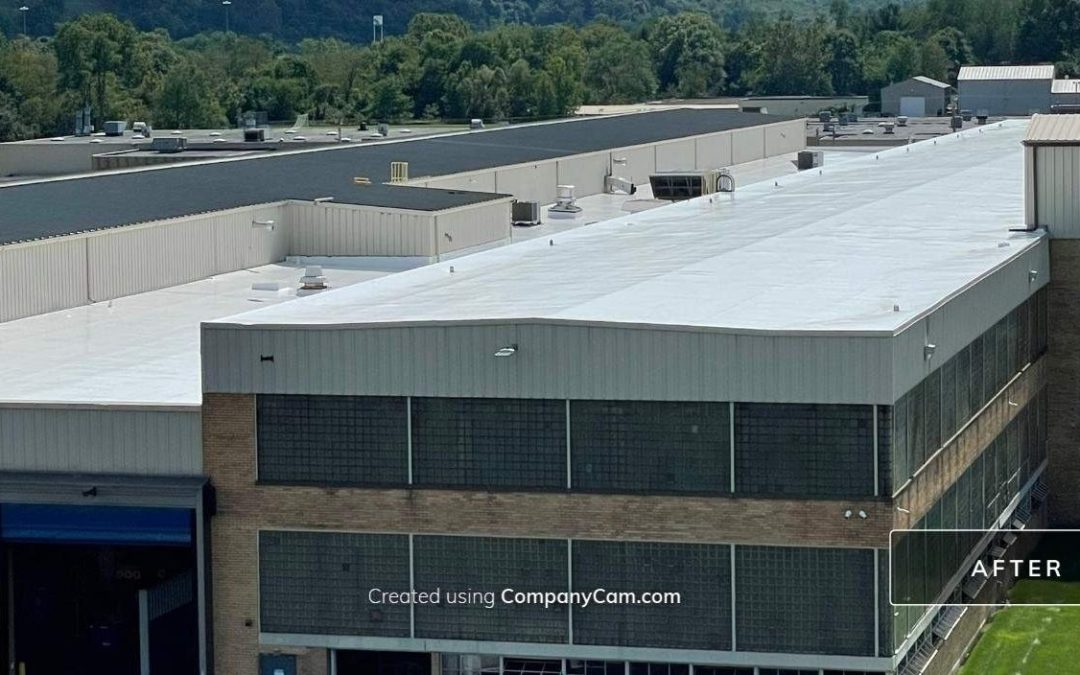
For property managers and commercial building owners, roof decisions often come down to timing, budget, disruption, and long-term performance.
A full roof replacement may eventually be necessary, but not every aging commercial roof is ready for that step. In some situations, a silicone roof coating can extend the useful life of the existing system, improve water resistance, and help delay the cost and disruption of a complete replacement.
That does not mean silicone coatings are the right answer for every building.
They work best when the existing roof is still structurally sound, the drainage system is functioning, and the main concerns involve weathering, minor surface deterioration, or repeated exposure to standing water. The key is knowing when a coating is a practical solution and when it would only cover a larger problem.
At Prescott Roofing, we believe commercial roofing decisions should be based on the actual condition of the roof, not a one-size-fits-all recommendation. For Pittsburgh property managers and building owners, that means looking carefully at the roof system, the building’s use, and the realities of Western Pennsylvania weather.
What Is a Silicone Roof Coating?
A silicone roof coating is a liquid-applied roofing material installed over an existing commercial roof surface. Once cured, it creates a seamless protective layer designed to resist water, ultraviolet exposure, and weather-related wear.
Silicone coatings are commonly used on low-slope commercial roofing systems, including certain modified bitumen, built-up, metal, and single-ply roofs. The existing roof must first be evaluated, cleaned, prepared, and repaired where needed.
The coating is not meant to hide active structural problems. It is designed to protect a roof that still has a solid foundation beneath it.
When a Silicone Coating May Make Sense
A silicone roof coating may be worth considering when the roof is showing age but does not yet require full replacement.
Practical use cases can include:
- An aging low-slope roof with surface weathering
- Minor cracks or worn areas that can be repaired before coating
- A roof that experiences occasional ponding water
- A building owner who wants to delay replacement while planning future capital expenses
- A roof with sound insulation and decking beneath the surface
- A commercial property where minimizing tenant disruption is important
For property managers overseeing several buildings, coatings may also support phased maintenance planning. Instead of replacing every roof at once, certain buildings may be good candidates for restoration while others receive more extensive work.
Why Silicone Performs Well Around Standing Water
Ponding water is a common concern on commercial roofs.
After heavy Pittsburgh rain or snowmelt, water may remain on low areas of a roof longer than it should. Poor drainage, settled insulation, clogged drains, or structural movement can all contribute to the problem.
Silicone is often considered for these conditions because it maintains strong water resistance even when exposed to standing water. Some other coating materials may soften or lose performance under prolonged moisture exposure.
However, coating a roof does not correct major drainage problems. If water is collecting because drains are blocked, the roof has lost proper slope, or the structure is sagging, those issues should be addressed as part of the project.
The best coating plan combines surface protection with practical drainage improvements where needed.
Reducing Disruption for Tenants and Operations
One of the biggest advantages of a roof coating project is that it can be less disruptive than a complete tear-off and replacement.
For occupied commercial buildings, that matters.
Full replacement may involve more noise, material removal, deliveries, equipment, staging, and longer periods of activity around the property. A coating project still requires careful planning and professional installation, but it may be completed with less impact on tenants, employees, customers, and daily operations.
This can be especially valuable for:
- Retail centers
- Office buildings
- Medical or professional facilities
- Warehouses that need to remain operational
- Multifamily properties
- Buildings with limited staging or access areas
Property managers should still ask how the contractor plans to manage odors, equipment, access, parking, and active work areas. A coating project may reduce disruption, but communication and logistics remain important.
Extending Roof Life and Managing Capital Costs
Commercial roof replacement is a major capital expense.
When a roof is a good candidate for restoration, a silicone coating may help extend its service life and provide building owners with more time to plan for eventual replacement. That can be useful when budgets are already committed to other building improvements or when ownership wants to spread capital projects across several years.
A coating should not be viewed as a permanent substitute for replacement. It is better understood as a roof-management tool.
For the right building, it can:
- Protect the existing roof surface
- Slow further weathering
- Seal properly prepared seams and minor cracks
- Improve resistance to ultraviolet exposure
- Support a more predictable maintenance schedule
- Delay the need for full replacement
The value depends heavily on proper preparation and whether the roof was a suitable candidate from the beginning.
Reflectivity and Summer Roof Temperatures
Many silicone coatings are light in color and highly reflective.
That reflectivity can help reduce the amount of solar heat absorbed by the roof surface during summer. For certain buildings, this may help lower rooftop temperatures and reduce heat transfer into the structure below.
The effect varies based on insulation, building design, roof condition, and how the property is used. A coating alone should not be treated as a complete energy-efficiency strategy, but it can contribute to a more reflective roof assembly.
In Pittsburgh, where commercial roofs must handle both hot, humid summers and freezing winter conditions, year-round performance matters.
When a Silicone Coating Is Not the Right Choice
A responsible contractor should also be clear about when a coating does not make sense.
A silicone coating may not be appropriate if the roof has:
- Widespread wet insulation
- Rotted or deteriorated decking
- Major structural movement
- Extensive membrane failure
- Severe drainage or slope problems
- Large areas of trapped moisture
- Repeated leaks caused by underlying system failure
Coating over these conditions may temporarily change the appearance of the roof without solving the real issue.
That is why moisture evaluation, core testing when appropriate, and a thorough roof inspection are important before recommending a restoration system.
Preparation Determines Performance
The success of a silicone coating project depends heavily on preparation.
The roof should be cleaned thoroughly. Damaged areas, seams, flashing, penetrations, and drains should be repaired or reinforced as needed. Loose materials and contaminants must be removed so the coating can bond properly.
Skipping preparation can lead to poor adhesion, early failure, and recurring leaks.
Property managers should ask for a clear scope that explains:
- How the roof will be cleaned and prepared
- Which repairs will be completed first
- How seams and penetrations will be treated
- What coating thickness will be applied
- How drainage areas will be handled
- What warranty options are available
- How the finished roof will be inspected
A vague estimate that simply says “apply silicone coating” does not provide enough information for a sound commercial decision.
Building a Practical Roof Maintenance Plan
A silicone coating works best as part of a broader maintenance strategy.
After installation, the roof should still be inspected regularly. Drains and gutters should remain clear, debris should be removed, and penetrations or rooftop equipment areas should be checked for damage.
Commercial roofs often experience traffic from HVAC contractors, maintenance teams, and other service providers. Even a durable coating can be damaged if tools, panels, or equipment are dragged across the surface.
Good documentation helps property managers track repairs and protect the roof over time.
The Bottom Line
Silicone roof coatings can make sense for Pittsburgh commercial buildings when the existing roof is structurally sound but beginning to show surface wear.
They can help improve water resistance, reduce disruption, extend roof life, and give property owners more flexibility when planning future capital expenses. They can be especially useful on low-slope roofs that experience ponding water or heavy weather exposure.
But a coating is only as good as the roof beneath it and the preparation that comes before it.
At Prescott Roofing, we believe commercial building owners and property managers deserve a clear assessment of all available options. Sometimes the right answer is a coating. Sometimes targeted repairs make more sense. And sometimes replacement is the only responsible long-term solution.
The goal should always be the same: choose the system that fits the building, protects the investment, and provides the clearest path forward.