
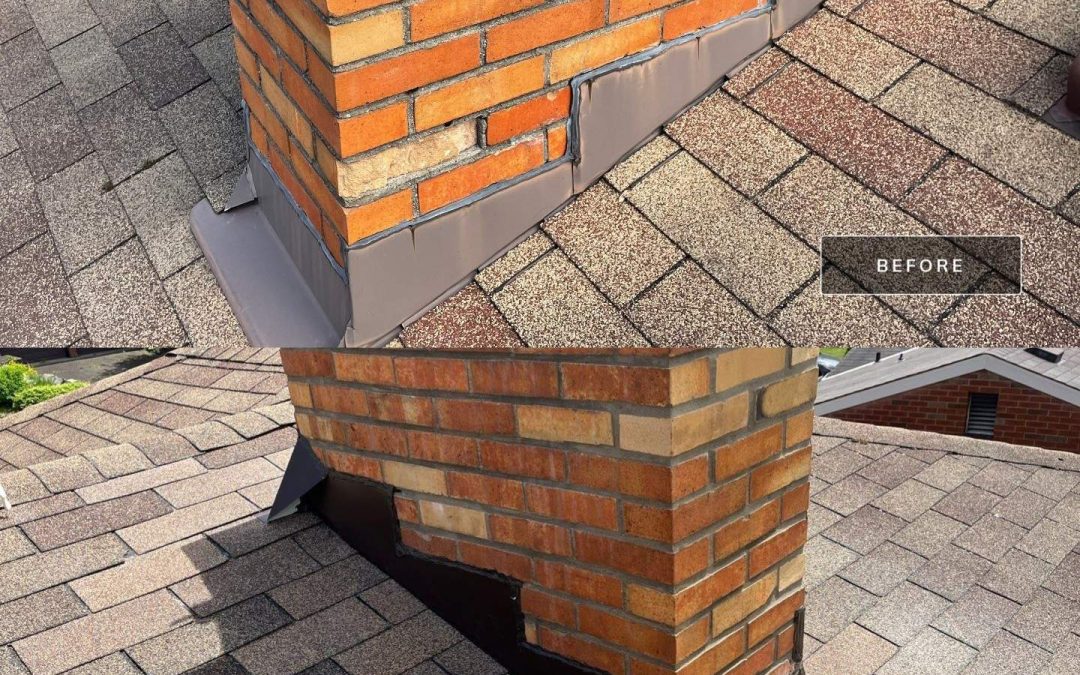
When a homeowner spots a water stain on the ceiling or notices moisture near an upper wall, the first assumption is usually simple: the roof is leaking.
Sometimes that is true.
But in many Pittsburgh homes, especially older ones, the problem is not always coming from the main roof surface itself. The shingles may not be the source at all. Instead, the leak may be starting where different exterior systems meet, around the chimney, within aging masonry, or at the flashing details that are supposed to keep water moving away from vulnerable transitions.
That is why some “roof leaks” are not really roof-field problems. They are system-connection problems.
At Prescott Roofing, we have spent generations working on Pittsburgh-area homes, and we know how often leaks begin at the details. Chimneys, masonry joints, flashing, roof valleys, and wall transitions all play a role in how a home handles water. When one part begins to fail, moisture can move in ways that make the real source harder to identify.
For homeowners, that means a leak does not always point to worn-out shingles alone. Sometimes the roof is only one part of a bigger exterior picture.
Why Roof Leaks Are Often More Complex Than They Look
Water rarely travels in a straight, obvious line.
By the time it shows up on an interior ceiling or wall, it may have entered the home several feet away from where the stain appears. It may have moved along framing, around masonry, under flashing, or behind trim before becoming visible indoors.
That is one reason leaks can be so frustrating for homeowners. The sign you see inside is often not the place where the problem started outside.
This is especially true on older Pittsburgh homes with steep rooflines, masonry chimneys, dormers, valleys, and multiple exterior transition points. These homes often have more architectural character, but they also have more places where water management depends on details being done correctly.
The Role of Chimneys in Roof Leaks
Chimneys are one of the most common areas where leak issues begin.
A chimney creates multiple vulnerable transitions at once. The roof has to tie into the masonry structure, and that connection depends heavily on flashing and sound surrounding materials. If any of those details begin to fail, water can work in.
Common chimney-related leak sources include:
- Deteriorated flashing around the chimney base
- Loose or aging counterflashing
- Cracked mortar joints
- Water absorption through masonry materials
- Deteriorated chimney crowns or caps
- Separation where the roof and chimney meet
In Pittsburgh, freeze-thaw cycles make this even more important. Brick and mortar absorb moisture over time. When temperatures drop, that moisture can freeze, expand, and gradually break down the chimney structure. Once the masonry weakens, water can move more easily into surrounding roof and wall areas.
That is why a stain near a chimney is not always just a roofing problem. It may be part of a chimney and masonry problem too.
How Masonry Can Let Water In
Masonry often looks solid and permanent, which can make it easy to assume it is not part of the leak issue. But masonry is porous, and on older homes, it can become a major pathway for moisture when it starts to deteriorate.
Over time, mortar joints can wear down, brick faces can begin to spall, and protective surfaces can lose effectiveness. When that happens, water can enter the masonry itself. Once inside, it may travel downward, outward, or into nearby roof transitions and wall assemblies.
On homes with chimneys, parapets, or masonry wall intersections, this can create confusing leak symptoms. A homeowner may see interior moisture and assume the shingles are failing, when the real issue is water entering through aging brick or mortar and then working its way to another location.
This is one reason masonry restoration and roofing often overlap more than homeowners expect.
Why Flashing Is the Connector That Matters Most
If chimneys and masonry are common leak sources, flashing is often the detail that either protects those areas or leaves them vulnerable.
Flashing is installed at roof transitions to direct water away from seams, penetrations, and changes in direction. Around chimneys, step walls, valleys, and roof-to-wall intersections, it is one of the most important defenses the home has.
When flashing is properly installed and in good condition, it helps manage water where the roof system is most vulnerable. When it is loose, deteriorated, poorly integrated, or patched incorrectly, leaks often follow.
Flashing problems may include:
- Lifted or separated edges
- Failed sealant
- Rust or corrosion on older metal
- Improper overlap or poor integration with masonry
- Gaps where flashing meets siding, trim, or brick
- Previous patchwork that addressed the symptom but not the cause
Because flashing sits at the meeting point of multiple materials, it is often where experience matters most. A leak there may involve roofing, masonry, trim, and drainage details all at once.
Why Shingles Are Not Always the Main Problem
Shingles usually get the blame first because they are the most visible part of the roof. And to be fair, damaged or aging shingles absolutely can cause leaks.
But when a leak appears near a chimney, upper wall, dormer, or roof edge, it is worth taking a broader view.
If the shingles are intact but the flashing is failing, the chimney masonry is deteriorating, or the roof-to-wall transition is compromised, water may still enter the home. Replacing or patching shingles alone may not solve the issue.
That is why some leak repairs fail repeatedly. The visible symptom gets treated, but the connected system behind it never gets properly addressed.
Common Signs the Problem May Be More Than the Roof Surface
Homeowners should consider a broader exterior issue when they notice:
- Water stains near chimneys or upper exterior walls
- Leaks that return after previous roof repairs
- Cracked or deteriorating mortar near the roofline
- Visible rust, gaps, or loose flashing
- Moisture showing up after wind-driven rain or snowmelt
- Interior stains that appear away from the main roof field
- Exterior brick or trim wear near roof transitions
These signs do not confirm the exact source on their own, but they do suggest the leak may involve more than shingles.
Why Older Pittsburgh Homes Need a System View
Pittsburgh homes often combine steep roofs, masonry chimneys, detailed trim, and weather exposure that puts constant stress on the exterior. Over time, those connected materials expand, contract, absorb moisture, and wear at different rates.
That makes leak diagnosis more complicated than simply finding a bad shingle.
In many cases, the right solution comes from looking at the home as a full exterior system. Roofing, flashing, masonry, drainage, and surrounding trim all affect how water moves. If one of those pieces is failing, the others may start to feel the effects too.
That is why experience matters so much. A contractor should not just ask, “Where is the stain?” They should ask how water may be entering, where it may be traveling, and which connected systems need attention.
When a roof leak is not really the roof, the real issue often comes down to how chimneys, masonry, and flashing are working together, or failing together.
For homeowners, that means it is important not to assume every leak starts with shingles alone. In many Pittsburgh homes, especially older ones, the problem begins at a transition point where water can move through brick, mortar, flashing, and nearby roof details before ever showing up inside.
At Prescott Roofing, we believe the best leak repairs start with the right diagnosis. That means looking beyond the obvious symptom and understanding how the whole exterior system is handling water.
Because when the real problem is at the connection point, fixing only the surface rarely fixes the leak for long.